
생강(Zingiber officinale)의 미용 기능성 소재로서의 활용 방안에 대한 고찰

Abstract
Ginger (Zingiber officinale) has long been consumed worldwide for its nutritional and medicinal benefits. Rich in diverse bioactive compounds, including gingerols, shogaols, and zingerone, ginger contributes to characteristic flavor and aroma as well as to a broad spectrum of biological activities. Traditionally, it has been used to manage gastrointestinal, metabolic, respiratory, musculoskeletal, and reproductive disorders. Contemporary pharmacological studies further show anti-apoptotic, anti-inflammatory, immunomodulatory, anti-tumor, anti-hyperglycemic, and anti-hyperlipidemic effects. The multifunctional properties of ginger have led to it being increasingly recognized as a sustainable and versatile resource with applications spanning the food, pharmaceutical, and cosmetic industries. In dermatological and cosmetic contexts, accumulating evidence suggests that ginger and its constituents promote skin and hair health, underscoring their potential as functional ingredients in nutricosmetic formulations. Future research should focus on clarifying the molecular mechanisms, validating efficacy through well-designed clinical trials, and establishing standardized approaches for product development and safety assessment. This paper reviews the current knowledge and highlights the prospects of ginger as a safe and effective material for nutricosmetic innovation.
Keywords:
ginger, gingerol, shogaol, zingerone, skin health, nutricosmetics서 론
최근 경제가 발전함에 따라 건강에 대한 의식이 높아지고 있으며, 영양가 있고 안전한 식품에 대한 소비자의 수요가 꾸준히 증가하고 있다(Zhou M 등 2023). 이러한 소비 트렌드는 단순한 식품 섭취를 넘어 질병 예방과 건강 증진을 동시에 추구하는 기능성 식품 및 뉴트라슈티컬(nutraceutical) 중심으로 변화하고 있다(Sachdeva V 등 2020). 특히 식물 유래 천연 원료는 다양한 생리활성 화합물을 함유하고 있어 약리학적 효과를 기반으로 기능성이 강화되며, 인공 합성물 대비 안전성과 지속가능성을 갖춘 소재로 주목받고 있다(Olaiya CO 등 2016). 더불어 현대 소비자는 가공을 최소화하고 천연 방부제를 함유한 신선한 식품을 선호하는 경향이 있어, 식품 산업에서는 지속 가능하고 친환경적인 생산 체계 구축에 힘쓰고 있다(Delshadi R 등 2021; Yang Z 등 2024). 이러한 관점에서 생리활성 화합물 함량이 높고 다양한 건강 효능을 가진 천연 소재의 발굴은 질병 예방뿐 아니라 인체 항상성 유지 및 노화 억제 등 광범위한 분야에 응용 가능성을 제시한다(Sharifi-Rad J 등 2020).
그중에서도 생강(Zingiber officinale)은 생강과(Zingiberaceae)에 생강목(Zingiberales)에 속하는 가늘고 긴 여러해살이풀로, 열대 아시아가 원산지이지만 현재 전 세계적으로 재배되는 대표적인 향신료 식물이다(Ahmed AA & Jogdand S 2021). 생강 속(Zingibers)에는 생강을 포함하여 80∼90종이 속해 있으며(Shahrajabian MH 등 2019), 생강은 매운맛과 향, 풍부한 영양소 및 다양한 약리학적 활성으로 인해 3,000년 이상 향료, 약재 및 영양 보충제로 이용되어 왔다(Kiyama R 2020). 특히 철, 칼슘, 마그네슘 등 무기질과 단백질, 지방산, 그리고 gingerol, shoaol, zingerone과 같은 주요 페놀성 화합물을 함유하고 있어 항산화, 항염증, 면역 조절 등 다방면의 생리 활성을 발휘한다(Baliga MS 등 2011). 이렇게 생강은 다양한 약리학적 성분을 많이 함유하고 있기에 이를 추출 및 정제하여 건강기능식품 원료로 가공하는 연구들이 활발히 진행되고 있다(Semwal RB 등 2015).
생강은 항균(Abdullahi A 등 2020), 항염증(Zhou X 등 2022), 항산화(Akullo JO 등 2023), 항암(Zhou Y 등 2022; Fayed AM 등 2024), 면역 조절(Kim J 등 2022), 항당뇨(El Gayar MH 등 2019) 등 다양하고 과학적으로 입증된 생리활성을 보유하고 있으며, 생강의 기능성과 영양적 가치가 지속적으로 밝혀지면서, 식품 산업에서의 응용 가능성에 대한 관심이 높아지고 있다(Granato D 등 2020).
그러나 현재까지의 대부분 연구는 식품 산업 내 일부 기능성 소재로서의 응용에 초점이 맞추어져 있으며, 생강의 피부 및 모발 건강 개선 효과를 포함한 미용 기능성 소재로서의 종합적 가능성을 체계적으로 분석한 연구는 부족하다. 이에 본 총설에서는 생강의 주요 영양 성분과 생리활성 화합물을 중심으로 그 생물학적 특성과 미용 관련 효능을 종합적으로 고찰하고, 기능성 식품 및 뷰티헬스 산업에서의 안전한 활용 가능성과 향후 연구 방향을 제시하고자 한다.
연구방법
본 논문은 생강 유래 생리활성 성분의 연구를 체계적으로 고찰하기 위해 총설을 작성하였다. 연구는 3단계로 나누어 수행하였으며, 1단계 생강의 영양 성분 및 생리활성 물질과 피부에 관한 효능을 문헌 검색하고 확인하였다. 2단계는 선정된 문헌의 연구 분석하고 이를 기반으로 내용을 서술하였다. 3단계는 본 총설에서 피력하고자 했던 내용을 분석된 데이터에 대한 객관적으로 분석 및 해석하여 결론을 유추하였다(Shin MY & Kwun IS 2016; Shin KO 2025). 문헌 검색의 국외 database로서는 google scholar 및 PubMed 등을 활용하였으며, 국내 database로서는 DBpia 및 RISS 등을 활용하였다. 문헌 검색은 ‘생강의 생리활성 물질’ 및 관련 용어들을 사용하여 검색하였으며, 약 90편의 논문을 참고하여 총설을 작성하였다.
결과 및 고찰
1. 생강의 영양 성분
전 세계적으로 식물유래 천연 소재들이 질병 예방 및 건강 증진에 기여하는 것으로 보고되어 있으며, 특히 생강은 다양한 영양 성분을 가지고 있어 기능성 및 영양강화 소재로 활용될 수 있다(Yang Z 등 2024). 생강의 주요 구성 성분 중 탄수화물은 전체의 약 60∼70%를 차지하며, 그 중 다당류(polysaccharide)는 항산화 및 항종양 등 다양한 생리활성을 나타내는 주요 기능성 성분으로 보고되고 있다(Liao D 등 2020). 특히, 생강 다당류의 분자량과 단당류 조성에 따른 생리활성 차이를 분석한 결과, 이들의 항종양 효과 및 면역 물질 생성과 대식세포의 증식에 관여하는 것으로 보고되었으며, 이러한 활성은 다당류의 분자 구조와 글리코시드 결합 형태와 밀접하게 관련됨이 확인되었다(Yang X 등 2021). 또 다른 주요 영양 성분은 단백질로, 전체 구성의 약 1∼9%를 차지한다. 생강 단백질에는 필수 아미노산인 히스티딘, 이소류신, 류신, 리신, 메티오닌, 페닐알라닌, 트레오닌, 트립토판 및 발린뿐만 아니라, 아르기닌, 아스파르트산, 글루탐산, 알라닌, 세린 및 시스틴 등의 비필수 아미노산도 포함되어 있음이 보고되었다(Ansari FR 등 2021). 또한, 생강의 무기 영양소는 인체의 생리 기능 유지에 필수적 영양 화합물로서, 다양한 대사 과정에 관여한다(Shaukat MN 등 2023). 생강에는 칼륨, 마그네슘, 칼슘, 철 등의 미네랄이 풍부하게 함유되어 있으며, 특히 칼륨은 체액 균형, 근육 수축 및 신경 기능 유지에 중요한 역할을 한다. 마그네슘은 산화적 인산화, 에너지 생산 및 해당 과정 등 주요 생리적 과정에 작용한다(Souza ACR 등 2023). 이 외에도 생강에는 비타민 C와 비타민 A 등을 포함한 다양한 비타민이 함유되어 있어 면역 기능 강화, 성장 및 발달 촉진, 세포 대사 조절에 기여하며, 근육 및 혈관의 정상적인 기능 유지에도 중요한 역할을 한다(Abara PN 등 2021).
2. 생강의 주요 생리활성 성분과 화학적 특징
생강의 생리활성 효과는 영양 성분과 함께 그 안에 포함된 화학적 생리활성 분자에 의해 좌우된다. 따라서 생강의 기능성을 이해하기 위해서는 주요 생리활성 화합물의 종류와 특성을 고찰하는 것이 중요하다. 생강의 생리활성 분자와 그 구성은 재배지나 기후 조건은 영양소 함량과 생물학적 활성에 영향을 미칠 수 있다(Bhatta DR 등 2014). 생강은 항염증, 항균 효과, 면역 조절 및 항산화 등의 다양한 효능이 입증되었으며, 생강은 음식으로서 풍미, 착색 및 보존에 중점을 두고 요리에도 활용된다(Rani K 등 2019). 이와 같이 생강의 영양학적 이점은 생강이 함유하는 다양한 생리활성 화합물과 밀접하게 관련되어 있다. 생강의 뿌리줄기에 존재하는 수많은 생리활성 화합물에서 비롯되며, 이 화합물들은 생강의 특유한 냄새와 맛을 낸다. 생강의 주요 생리활성 성분은 크게 휘발성(volatile) 성분과 비휘발성(non-volatile) 성분으로 구분되며, 휘발성 성분은 주로 에센셜 오일과 비휘발성 성분에는 gingerol, shogaol 및 zingerone 등의 폴리페놀 성분이 있다. 이러한 화합물은 서로 다른 영양적 및 약리적 기능을 나타낸다. 또한, 생강에는 테르펜, 플라보노이드, 안토시아닌, 페닐프로파노이드와 같은 식물 화학 물질이 포함되어 있기에 이러한 성분은 식품, 화장품 그리고 의약품에도 많이 활용된다(Ahmed MARH 등 2016).
생강의 생리활성 성분은 크게 휘발성(에센셜 오일)과 비휘발성(폴리페놀)으로 구분되며, 각각이 향기 및 기능성의 핵심을 담당한다. 생강의 에센셜 오일은 생강의 뿌리줄기에서 추출되는 성분으로, 구성하는 화학 조성은 생강의 지리적 기원, 뿌리줄기의 신선도, 건조도 및 추출 방법에 영향을 받는다(Kamal GM 등 2023). 생강은 품종에 따라 뿌리줄기의 형태뿐 아니라 휘발성 성분 조성에서도 차이를 보인다(Setzer WN 등 2021). 생강은 주로 휘발성 성분과 비휘발성 성분을 포함하며, 휘발성 성분은 생강의 1∼3%를 차지한다. Al-Dhahli AS 등(2020)의 연구에서 GC-MS를 사용하여 생강 에센셜 오일의 휘발성 화합물을 분석하였을 때 여러 휘발성 화합물이 존재함을 확인하였으며, α-zingiberene가 가장 풍부하게 존재하는 화합물임을 확인하였고, 다음으로는 β-phellandrene, α-curcumene, β-sesquiphellandrene 순서로 많이 존재함을 확인하였다. 생강은 저장 중 품질 저하를 방지하기 위해 건조 과정을 거치며, 이때 주요 향기 성분의 열 변환이 일어난다. 건조 생강 에센셜 오일의 주요 성분은 zingiberene, sesquiphellandrene, α-curcumene 및 β-sesquiphellandrene 등으로, 신선 생강과 유사한 프로파일을 보인다(Bhattarai K 등 2018). 생강 유래 에센셜 오일은 부패 및 병원성 미생물에 대한 항균 활성이 있음이 연구되었다(Singh G 등 2008). 한편, 휘발성 성분 외에도 생강의 비휘발성 페놀성 화합물은 항산화 및 항염 활성이 우수한 것으로 보고되었다(Warsito MF 등 2021; Gunasena MT 등 2022).
폴리페놀은 항산화 및 항염증 작용을 통해 만성 질환의 위험을 감소시켜 건강을 증진하고, 심혈관 질환 및 신경퇴행성 질환과 그 요인을 예방에 도움을 준다(Oluwole O 등 2022). 생강에는 페놀 화합물을 포함한 여러 생리활성 물질이 들어있으며, 생강의 대표적인 페놀 화합물로 gingerol, shogaol 및 zingerone 성분은 생강의 매운맛을 내며, 기능적으로 항종양, 항염증 및 항산화 작용을 포함한 약리학적 특성을 가진다(Erhonyota C 등 2023). 또한, 이 물질의 생체 이용률과 대사가 유사함이 보고되었으며, 이러한 항산화 및 항염 작용은 피부 세포 보호, 염증 완화 및 색소 침착 억제 등에 기여할 수 있다(Samota MK 등 2024). 생강에 함유된 페놀 화합물 중 주성분 일부를 살펴보고자 한다.
(1) Gingerol
생강에서 발견되는 생리활성 물질 중 핵심 성분인 gingerol은 생강의 뿌리줄기에서 추출되며, gingerol은 생강의 매운맛을 유발하는 주요 페놀성 화합물로(Edo GI 등 2025), 구조적 유사체 6-, 8- 및 10-gingerol 등이 다양한 생리활성을 나타내며(Fig. 1), 이외에도 2- 및 4-gingerol과 같이 다양한 형태로 존재한다(Zhang F 등 2017). 그중 가장 풍부하게 존재하는 6-gingerol은 n-octanol과 물의 분배 계수(log Po/w)값이 3.13으로 최적의 친유성을 가지는 화합물로 위장관 흡수율이 높고 혈액 및 뇌 장벽의 투과성도 우수하다(Durojaye OA 등 2019; Samota MK 등 2024). Gingerol은 강력한 항염 특성을 가지기에 신체 염증을 줄여 보호 효과를 가지며, 심혈관 질환 및 관절염을 포함한 만성 질환을 예방하는 데 효과를 가진다(Zahoor A 등 2020; Hamza AA 등 2021). 또한, gingerol은 포도당 흡수와 인슐린 민감도를 높여 식후 혈당 수치를 낮추어 항당뇨 효과도 보고되었다(Zhu J 등 2018; Cheng Z 등 2022).
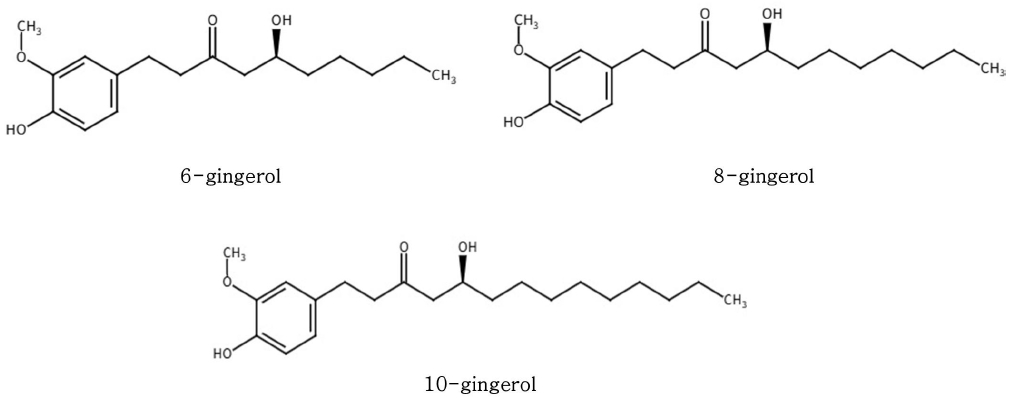
Chemical structures of 6-, 8- and 10-gingerols. Gingerols are classified as 6-,8- and 10-gingerols according to the length of their unbranched alkyl side chain. 6-Gingerol is the major compound in the rhizome responsible for its pungency, while other gingerols, such as 8- and 10-gingerol, are present at relatively lower concentrations.
(2) Shogaol
Shogaol은 열처리 및 건조 과정에서 gingerol의 탈수반응으로 생성되며, 건조 생강의 주요 활성 성분으로 알려져 있다. 건조 과정을 거치면 gingerol의 불안정한 β-hydroxyl ketone 골격의 탈수반응을 통해 shogaol이 형성되어(Fig. 2) shogaol의 농도가 증가한다(Ghasemzadeh A 등 2018; Attallah KA 등 2025). Shogaol은 건조된 생강에서 매콤한 맛을 부여하며, gingerol과 유사하게 다양한 사슬 형태의 shogaol로 존재하고, 그중에서도 6-shogaol이 건조된 생강에서 가장 풍부하게 존재한다(Kou X 등 2018; Maghraby YR 등 2023). 6-Shogaol은 nuclear factor-kappa B(NF-κB), activator protein-1(AP-1), mitogen-activated protein kinase(MAPK), peroxisome proliferator-activated receptor gamma(PPARγ)를 포함한 여러 신호 전달 경로를 통해 쥐 대식세포, 미세아교세포 및 표피 각질형성세포에서 in vivo 실험에서 염증 과정을 완화 효과가 보고되었다(Pan MH 등 2008; Han Q 등 2017; Chen F 등 2019). 6-Shogaol은 금속 결합 능력이 강력하기에 자유 라디칼을 제거하고, 지질 과산화를 감소시켜 산화효소의 작용을 억제하여 항산화 효과를 나타냄이 보고되었으며(Kou X 등 2018), 파킨슨병에서 필수 신경전달물질을 회복시켜 운동 기능과 우울증 유사 행동을 증진 시켰을 뿐만 아니라, 소포 모노아민 수송체 2(VMAT2)의 조절을 촉진한다고 보고되었다(Kim JH 등 2025). 또한, 지방세포 내 지질 축적 및 중성지방 저장을 감소시키고, 열 생성을 자극하고 에너지 소비를 증가시켜 항비만에도 영향을 미치는 것으로 나타났다(Deng X 등 2019; Kim B 등 2021).
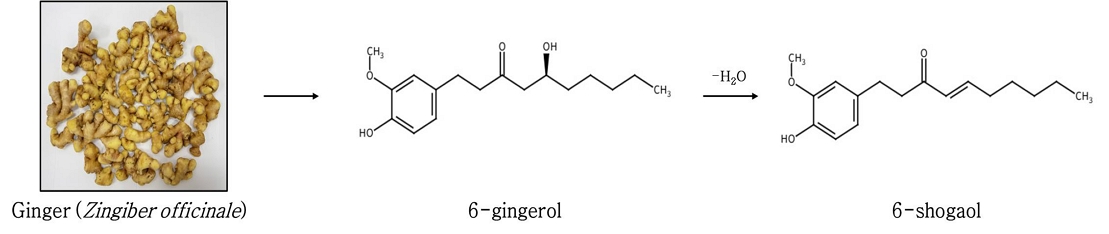
Conversion of 6-gingerol into 6-shogaol in ginger (Zingiber officinale). The schematic represents the conversion of 6-gingerol into 6-shogaol. Upon heating or drying, 6-gingerol, the major constituent of ginger (Zingiber officinale), is converted through dehydration into 6-shogaol.
(3) Zingerone
Zingerone은 vanillylacetone이라고도 불리며, 생강의 가열 및 건조 과정 중 gingerol 또는 shogaol의 열분해와 역알돌 반응(retro-aldol reaction)을 통해 생성되며(Ahmad B 등 2015), zingerone은 신선한 향미를 부여하나, 열처리 후에는 매운맛이 감소하고 달콤한 향미를 부여한다(Jesudoss VAS 등 2017). Zingerone은 in vitro 실험에서 DNA를 염화주석으로 유도하여 활성 산소종(Reactive oxygen species, ROS) 손상으로부터 보호하며(Rajan I 등 2013), 장 평활근의 산화 스트레스를 예방하여 직접적인 효과를 나타내며(Banji D 등 2014), 미토콘드리아 손상과 지질의 과산화를 감소시키고 관련 단백질인 Bcl-2-asscociated X(Bax), apoptotic protease activating factor-1(APaf-1), caspase3 등을 하향 조절함으로써 zingerone이 강력한 항산화제라는 것이 입증되었다(Vaibhav K 등 2013). Zingerone은 항암 환자에게 주요 부작용으로 메스꺼움과 구토 징후가 나타나는데(Ryan JL 등 2012), 중추 및 말초 신경계의 세로토닌 수용체에 대해 길항적 기능을 나타내며 구토를 치료에 사용할 수 있다(Sharma SS 등 1997). 또한, zingerone은 지방세포 내 lipase 활성 증거를 통해 기저 및 이소프레날린 유도 지방 분해를 촉진한다(Han LK 등 2008). 이러한 항산화 및 지방 대사 조절 작용은 피부 세포 산화 손상 억제 및 노화 지연 효과에도 기여할 수 있을 것으로 사료된다.
3. 생강 기반 화합물의 피부 관련 효능 및 작용 기전
생강 유래 활성물질인 gingerol, shogaol 및 zingerone은 항산화 활성에 기반해 미백, 주름 개선, 모발 성장 효과 등 다양한 피부 생리활성을 유도한다. 자유 라디칼은 짝을 이루지 않은 전자를 가진 반응성이 매우 높은 원자 또는 분자로 호기성 세포의 대사 과정에서 산소가 특정 분자와 반응할 때 ROS가 생성된다(Ozkur M 등 2022). ROS의 형성은 세포 항상성 유지에 필수적이며 항산화 방어 시스템을 통해 산화 스트레스와 항산화 균형을 유지한다(Huyut Z 등 2017). 하지만 과도한 ROS 축적은 세포 기능 장애를 초래하며, 암과 신경퇴행성 질환과 같은 만성 질환의 주요 원인으로 알려져 있다(Apak R 등 2016). 정상적인 ROS 수준의 유지는 세포의 정상적인 기능을 위해 매우 중요하다. 여러 연구에서 생강 추출물이 in vitro 실험에서 높은 환원력과 자유 라디칼 소거 활성을 보여 강력한 항산화 활성을 지닌다는 결과가 보고되었다(Tohma H 등 2017; Yousfi F 등 2021). 여러 세포 기반 실험에서도 생강 추출물이 산화 스트레스에 의해 유도된 세포 손상을 유의하게 감소시키는 것을 확인하였다(Sief M 등 2021). 생강의 주요 활성 성분인 6-gingerol은 동물모델에서 글루타티온(glutathione; GSH)과 카탈라아제(catalase; CAT)를 높이고 말론알데히드(malondialdehyde; MDA) 및 초과산화물 디스뮤타제(superoxide dismutase; SOD) 수치를 낮추어 항산화 효과를 나타내었으며(Keivanpour H 등 2024), 지질다당류(lipopolysaccharide; LPS)로 유도된 대식세포에서의 유도성 질산화효소(inducible nitric oxide synthase; iNOS) 발현을 감소시키는 효과가 있음이 확인되었다(Bischoff-Kont I & Robert R 2021; Guo XX 등 2022). 또한, 과산화질소에 의해 매개되는 산화적 손상도 효과적으로 억제함이 보고되었다(Ippoushi K 등 2003). 생강 유래 페놀 화합물이 ROS 제거뿐 아니라 항산화 효소계를 조절함으로써 세포 손상과 피부 노화를 예방할 수 있는 잠재력을 지님을 시사한다.
멜라닌은 자외선으로 인한 피부 자극으로부터 피부를 보호하는 데 필수적인 역할을 한다. 그러나 멜라닌이 과도하게 생성되면 색소 침착, 기미, 주근깨, 일광성 흑자 및 피부암 및 피부 미용 및 질환 문제를 유발할 수 있다(Zhao W 등 2022). 화학 성분을 함유한 제품은 피부 자극을 유발하는 안전성 문제가 있기에 천연 식물 추출물과 전통 한약재의 미백 효능을 얻기 위한 연구가 진행되고 있다(Wang B 등 2022). 생강은 다양한 생리활성을 포함하고 있으며, 생강에서 추출한 휘발성 오일은 tyrosinase 활성을 강력하게 억제하고, 멜라닌 생성 관련 단백질의 발현을 감소시키는 효과를 보였다(Wang LX 등 2018). 생강의 뿌리줄기에서 추출한 생강 오일과 6-shogaol은 microphthalmia-associated transcription factor(MITF) 발현을 억제하고, tyrosinase 및 멜라닌 합성을 억제하여 미백효과를 나타내었다(Yao C 등 2012; Huang HC 등 2014). 또한, 생강에서 가장 풍부한 생리활성 화합물인 6-gingerol은 H2O2 유도 산화 스트레스로부터 멜라닌 세포를 보호하여 멜라닌 합성을 억제함을 확인하였다(Yang L 등 2020). 이러한 결과는 생강 유래 주요 화합물들이 tyrosinase-MITF-melanogenesis 경로를 조절함으로써 피부색소 침착을 완화하고, 천연 미백 및 nutricosmetic 소재로서 높은 응용 가능성을 지님을 시사한다.
피부는 다양한 외부 요인으로부터 신체를 보호할 뿐만 아니라, 탄력과 구조적 완전성을 유지함으로써 중요한 미용적 기능을 담당한다(Ozkur M 등 2022). 피부 노화는 이러한 구조적 기능이 점차 약화 되면서 나타나며, 주름 형성, 탄력 저하, 및 피부 건조 등의 현상이 표현된다. 특히 자외선(ultraviolet; UV)에 장기간 노출되는 것은 외인성(extrinsic) 노화의 주요 요인으로, 진피 내 콜라겐 분해 효소의 발현 증가와 엘라스틴 섬유 손상을 유도한다(Zhang S & Duan E 2018). 생강 추출물은 섬유아세포 유래 elastase 활성을 억제하여 탄력 단백질 분해를 감소시키고, UVB로 유도된 동물모델(mouse 및 rat) 피부에서 탄력 손실을 예방하는 효과가 보고되었다(Tsukahara K 등 2006). 또한 6-shogaol은 UVA로 자극된 인간 피부 섬유아세포(HDF)에서 피부의 탄력에 관여하는 1형 콜라겐(COL1α1)의 발현을 증가시키고, 1형 콜라겐 분해 효소인 MMP1의 발현을 감소시켜 콜라겐 대사 균형을 회복시키는 것으로 보고되었다(Han HS 등 2018). 이러한 결과는 6-shogaol이 MAPK 및 AP-1 신호 경로를 조절하여 광노화성 주름 형성을 억제할 수 있음을 시사한다. 인체 적용 연구에서도 생강 오일이 함유된 바디 크림을 4주간 사용한 피험자에서 주름 깊이, 거칠기 및 피부 탄력 지수가 유의하게 개선되는 결과가 확인되었다(Leelapornpisid P 등 2015). 따라서, 생강 유래 활성물질은 콜라겐 분해 억제 및 진피 재생 촉진을 통해 피부의 구조적 탄력성을 유지함으로써, 항노화 기능성 화장품 및 nutricosmetic 소재로 활용될 가능성이 매우 높다.
머리카락은 신체 보호, 단열 및 피지 분산 등 다양한 생리적 기능을 수행하며, 동시에 인간의 미적 인상과 사회적 자존감에 직접적인 영향을 미치는 중요한 피부 부속기관이다(Alzoabi NM 등 2023). 스트레스 증가, 염증, 호르몬 불균형, 유전 및 면역 반응과 같은 다양한 요인이 탈모를 유발할 수 있다(Gokce N 등 2022; Hasan R 등 2022; Liang W 등 2024). 이에 대한 비약물적·천연물 기반 치료 접근법에 대한 관심이 증가하고 있다(Kesika P 등 2023; Patel MN 등 2025). 생강의 휘발성 오일은 우수한 피부 투과성과 생리활성을 지닌 천연 소재로, 함유된 gingerol 및 shogaol 유도체가 모낭 세포의 증식을 촉진하고, 세포 주기 정지를 완화하며, 세포 사멸(apoptosis)을 억제함으로써 모발 성장에 긍정적인 영향을 미친다(Li T 등 2024). Putra EDL 등(2018)은 백생강(white ginger)과 적생강(red ginger) 추출물의 모발 성장 활성을 비교한 결과, 두 추출물 모두 농도 의존적으로 모발 성장을 촉진하였으며, 이는 생강의 항염·항산화·호르몬 조절 효과가 복합적으로 작용한 결과로 제시되었다(Table 1). 이러한 연구들은 생강 유래 생리활성 화합물이 wingless-related intergration site(Wnt)/β-catenin 경로를 활성화하고, 모낭의 성장기(anagen phase)를 연장시켜 탈모 예방 및 모발 성장 촉진에 기여할 수 있음을 시사한다. 따라서, 생강 추출물 및 그 유도체는 모발 성장 개선을 위한 기능성 화장품 및 nutricosmetic 원료로서 높은 응용 가능성을 지닌다.

Summary of cosmeceutical effects and mechanisms of bioactive compounds from ginger
4. 생강 기반 미용 소재 연구의 한계와 향후 전망
생강 추출물 및 그 유래 생리활성 화합물은 미용 기능성 소재로서 높은 생물학적 잠재력을 보이지만, 여전히 여러 한계점을 지닌다. 현재까지의 연구는 세포 수준(in vitro) 또는 동물 모델(in vivo) 단계의 기초적 검증에 국한된 경우가 많으며, 인체 적용 시험을 통한 효능 및 안전성에 대한 근거가 충분히 확립되지 않았다. 일부 임상 연구가 수행되었으나, 표본 규모가 제한적이고 연구 설계가 단기적이라는 점에서 장기적 안전성 및 지속 효과에 대한 데이터는 부족한 실정이다. 또한, 추출물의 성분 조성, 용매, 농도, 제조공정 등 실험 조건의 차이로 인해 결과 간의 재현성과 비교 가능성이 낮으며, 활성물질의 표준화와 품질 관리 지침이 미흡한 점도 중요한 한계로 지적된다. 이와 함께, 생강의 주요 활성 성분인 gingerol, shogaol 및 zingerone 간의 상호작용과 시너지 기전이 충분히 규명되지 않아, 복합 제형 개발 및 최적화를 위한 체계적 연구가 필요하다. 향후 연구에서는 다음과 같은 접근이 요구된다. 첫째, 대규모 장기 인체 임상 연구를 통해 생강 기반 소재의 안전성과 효능을 과학적으로 입증해야 한다. 둘째, 추출물의 표준화 및 제형 안정성 확보, 그리고 활성 성분 간 상호작용에 대한 분자 수준 기전 분석이 병행되어야 한다. 셋째, in vitro 및 in vivo 임상 데이터를 통합한 다층적 검증 체계 구축을 통해, 생강의 미용 기능성 및 nutricosmetic 응용 가능성을 과학적으로 뒷받침할 필요가 있다. 이러한 연구적 노력이 뒷받침된다면, 생강은 자연 유래·안전성·기능성을 모두 충족하는 차세대 친환경 이용 소재 및 nutricosmetic 원료로서 활용될 가능성이 클 것으로 사료된다.
결 론
생강(Zingiber officinale) 추출물과 주요 생리활성 성분(gingerol, shogaol 및 zingerone 등)은 항산화, 항염증, 미백, 주름 개선 및 모발 성장 촉진 등 폭넓은 피부 및 모발 관련 생리활성을 나타내며, 기능성 화장품 및 nutricosmetic 소재로서 높은 응용 가능성을 보여준다. 특히 6-gingerol과 6-shogaol은 강력한 항산화·항염 작용을 통해 피부 세포 손상을 억제하고 콜라겐 구조를 유지하는 데 기여하며, 백생강(white ginger)과 적생강(red ginger) 추출물 모두 모낭 세포 증식 촉진 및 모발 성장 개선 효과를 나타낸다. 이러한 특성으로 생강은 부작용이 거의 없는 천연 유래 생리활성 소재로 평가되며, 피부·모발 건강을 위한 친환경 미용 기능성 원료로서 산업적 가치가 높다.
본 총설을 통해 생강 기반 미용 소재의 과학적 근거를 종합하였으며, 향후 안전하고 효과적인 제품 개발을 위해 다음과 같은 연구 방향을 제시한다. 첫째, 생강 유래 성분의 분자 수준 작용기전 규명이 필요하다. 현재 보고된 항산화 및 미백, 콜라겐 합성 촉진 등의 효능은 부분적으로 밝혀졌으나, 세포 신호전달 경로(MAPK, NF-κB, Wnt/β-catenin 등) 및 전사인자 조절 기전에 대한 체계적 연구가 필요하다. 둘째, 대규모 임상연구를 통한 인체 효능 검증이 요구된다. 현재 대부분의 연구가 세포·동물 모델에 국한되어 있으며, 일부 임상 연구는 소규모·단기간의 결과에 불과하여 통계적 신뢰도가 제한적이다. 향후에는 무작위 대조 임상시험(randomized controlled trials)을 통해 효능과 안전성을 장기적으로 평가해야 하며, nutricosmetic 관점에서 피부 및 모발 건강에 대한 인체 적용 결과를 축적하는 것이 중요하다. 셋째, 제품화 및 산업적 응용 전략의 구체화가 필요하다. 생강 유래 활성물질의 흡수율과 안정성을 향상시키기 위한 제형 기술(예: 마이크로캡슐화, 나노에멀젼화)의 도입이 요구되며, 식품의약품안전처(MFDS) 등 기관의 기능성 인증 및 안전성 평가 체계를 기반으로 한 표준화된 산업 적용 모델 구축이 필요하다.
결론적으로, 생강은 안전성·기능성을 모두 갖춘 고부가가치 미용 기능성 소재로서, 식품·화장품·의약품 등 융합 산업 전반에서 폭넓은 활용 가능성을 지닌다. 향후에는 기전 연구, 임상 검증, 제형 개발의 통합적 접근을 통해, 생강 기반 nutricosmetic 제품의 과학적 근거와 산업적 실현 가능성을 한층 강화해야 할 것이다.
Acknowledgments
본 과제는 2025년도 교육부 및 경상남도의 재원으로 경상남도 RISE센터의 지원을 받아 수행된 지역혁신중심 대학지원체계(RISE)의 결과입니다(2025-RISE-16-005).
REFERENCES
- Abara PN, Adjeroh LA, Nwachukwu MO, Osinomumu ID (2021) Differentiation between two spices: Zingiber officinale (ginger) and Curcuma longa (Tumeric); their proximate, mineral and vitamin contents. J Sci Res 7(1): 17-24.
-
Abdullahi A, Khairulmazmi A, Yasmeen S, Ismail IS, Norhayu A, Sulaiman MR, Ahmed OH, Ismail MR (2020) Phytochemical profiling and antimicrobial activity of ginger (Zingiber officinale) essential oils against important phytopathogens. Arab J Chem 13(11): 8012-8025.
[https://doi.org/10.1016/j.arabjc.2020.09.031]

-
Ahmad B, Rehman MU, Amin I, Arif A, Rasool S, Bhat SA, Afzal I, Hussain I, Bilal S, Mir MUR (2015) A review on pharmacological properties of zingerone (4-(4-hydroxy-3-methoxyphenyl)-2-butanone). Sci World J 2015: 816364.
[https://doi.org/10.1155/2015/816364]
-
Ahmed AA, Jogdand S (2021) Medicinal properties of Zingiber officinale. J Pharm Res Int 33(60B): 3341-3347.
[https://doi.org/10.9734/jpri/2021/v33i60B35015]
-
Ahmed MARH, Mustafa AI, Hussan HAR, Elfaki AE (2016) Proximate analysis, protein and starch digestibility, specific volume, and sensory evaluation of (gluten-free) tin bread. Open Access Libr J 3: e2698.
[https://doi.org/10.4236/oalib.1102698]
-
Akullo JO, Kiage-Mokua BN, Nakimbugwe D, Ng’ang’a J, Kinyuru J (2023) Phytochemical profile and antioxidant activity of various solvent extracts of two varieties of ginger and garlic. Heliyon 9(8): e18806.
[https://doi.org/10.1016/j.heliyon.2023.e18806]
-
Al-Dhahli AS, Al-Hassani FA, Alarjani M, Yehia HM, Al Lawati WM, Azmi SNH, Khan SA (2020) Essential oil from the rhizomes of the Saudi and Chinese Zingiber officinale cultivars: Comparison of chemical composition, antibacterial and molecular docking studies. J King Saud Univ Sci 32(8): 3343-3350.
[https://doi.org/10.1016/j.jksus.2020.09.020]
-
Alzoabi NM, Alsharif HM Sr, Alawami AM, Habarah HH, Alhawaj HA, Bin Rubaian N, Alqahtani JM (2023) Assessing the impact of alopecia on quality of life, depression, and self-esteem in Saudi Arabia. Cureus 15(12): e49864.
[https://doi.org/10.7759/cureus.49864]
- Ansari FR, Chodhary KA, Ahad M (2021) A review on ginger (Zingiber officinale Rosc) with unani perspective and modern pharmacology. J Med Plants Stud 9(3): 101-104.
-
Apak R, Özyürek M, Güçlü K, Çapanoğlu E (2016) Antioxidant activity/capacity measurement. 1. Classification, physicochemical principles, mechanisms, and electron transfer (ET)-based assays. J Agric Food Chem 64(5): 997-1027.
[https://doi.org/10.1021/acs.jafc.5b04739]
-
Attallah KA, El-Dessouki AM, Abd-Elmawla MA, Ghaiad HR, Abo-Elghiet F, Mustafa AM, El-Shiekh RA, Elosaily H (2025) The therapeutic potential of naturally occurring 6-shogaol: An updated comprehensive review. Inflammopharmacology: in press.
[https://doi.org/10.1007/s10787-025-01812-z]
-
Baliga MS, Haniadka R, Pereira MM, D’Souza JJ, Pallaty PL, Bhat HP, Popuri S (2011) Update on the chemopreventive effects of ginger and its phytochemicals. Crit Rev Food Sci Nutr 51(6): 499-523.
[https://doi.org/10.1080/10408391003698669]
-
Banji D, Banji OJF, Pavani B, Kranthi Kumar C, Annamalai AR (2014) Zingerone regulates intestinal transit, attenuates behavioral and oxidative perturbations in irritable bowel disorder in rats. Pytomedicine 21(4): 423-429.
[https://doi.org/10.1016/j.phymed.2013.10.007]
-
Bhatta DR, Gokhale S, Sharma AL, Gupta U, Gaur A, Gowda S, Raut S, Thapa S, Khadka R (2014) Carrier state of Haemophilus influenzae type b (Hib), Streptococcus pneumoniae, Streptococcus pyogenes, Neisseria meningitidis and Corynebacterium diphtheriae among school children in Pokhara, Nepal. Asian Pac J Trop Dis 4(1): 45-49.
[https://doi.org/10.1016/S2222-1808(14)60312-1]
- Bhattarai K, Pokharel B, Maharjan S, Adhikari S (2018) Chemical constituents and biological activities of ginger rhizomes from three different regions of Nepal. J Nutri Diet Probiotics 1(1): 180005.
-
Bischoff-Kont I, Fürst R (2021) Benefits of ginger and its constituent 6-shogaol in inhibiting inflammatory processes. Pharmaceuticals (Basel) 14(6): 571.
[https://doi.org/10.3390/ph14060571]
-
Chen F, Tang Y, Sun Y, Veeraraghavan VP, Mohan SK, Cui C (2019) 6-Shogaol, a active constiuents of ginger prevents UVB radiation mediated inflammation and oxidative stress through modulating NrF2 signaling in human epidermal keratinocytes (HaCaT cells). J Photochem Photobiol B 197: 111518.
[https://doi.org/10.1016/j.jphotobiol.2019.111518]
-
Cheng Z, Xiong X, Zhou Y, Wu F, Shao Q, Dong R, Liu Q, Li L, Chen G (2022) 6-Gingerol ameliorates metabolic disorders by inhibiting hypertrophy and hyperplasia of adipocytes in high-fat-diet induced obese mice. Biomed Pharmacother 146: 112491.
[https://doi.org/10.1016/j.biopha.2021.112491]
-
Delshadi R, Bahrami A, Assadpour E, Williams L, Jafari SM (2021) Nano/microencapsulated natural antimicrobials to control the spoilage microorganisms and pathogens in different food products. Food Control 128: 108180.
[https://doi.org/10.1016/j.foodcont.2021.108180]
-
Deng X, Zhang S, Wu J, Sun X, Shen Z, Dong J, Huang J (2019) Promotion of mitochondrial biogenesis via activation of AMPK-PGC1α signaling pathway by ginger (Zingiber officinale Roscoe) extract, and its major active component 6-gingerol. J Food Sci 84(8): 2101-2111.
[https://doi.org/10.1111/1750-3841.14723]
- Durojaye OA, Nwanguma BC, Joshua PE, Ogidigo JO, Cosmas S, Asomadu RO, Obeta JN (2019) Evaluation of 6-gingerol and its modified analogues as therapeutic candidates against Schistosoma mansoni phosphofructokinase. Vaccimonitor 28(1): 38-47.
-
Edo GI, Igbuku UA, Makia RS, Isoje EF, Gaaz TS, Yousif E, Jikah AN, Zainulabdeen K, Akpoghelie PO, Opiti RA, Essaghah AEA, Ahmed DS, Umar H (2025) Phytochemical profile, therapeutic potentials, nutritional composition, and food applications of ginger: A comprehensive review. Discov Food 5: 25.
[https://doi.org/10.1007/s44187-025-00280-2]
-
El Gayar MH, Aboromia MMM, Ibrahim NA, Hafiz MHA (2019) Effects of ginger powder supplementation on glycemic status and lipid profile in newly diagnosed obese patients with type 2 diabetes mellitus. Obes Med 14: 100094.
[https://doi.org/10.1016/j.obmed.2019.100094]
-
Erhonyota C, Edo GI, Onoharigho FO (2023) Comparison of poison plate and agar well diffusion method determining the antifungal activity of protein fractions. Acta Ecol Sin 43(4): 684-689.
[https://doi.org/10.1016/j.chnaes.2022.08.006]
-
Fayed AM, S N H, Samy W, Bassiouny K, Abd-El-Aziz AA, AlKhafaf DMR, Shareef HK, AbdEirahman M, Aldhalmi AK, Obaida DS, Khalil H, Abd Elbadee A (2024) Anticancer properties of garlic and ginger extract in colon cancer cell line. Asian Pac J Cancer Prev 25(11): 3895-3905.
[https://doi.org/10.31557/APJCP.2024.25.11.3895]
-
Ghasemzadeh A, Jaafar HZE, Baghdadi A, Tayebi-Meigooni A (2018) Formation of 6-, 8- and 10-shogaol in ginger through application of different drying methods: Altered antioxidant and antimicrobial activity. Molecules 23(7): 1646.
[https://doi.org/10.3390/molecules23071646]
- Gokce N, Basgoz N, Kenanoglu S, Akalin H, Ozkul Y, Ergoren MC, Beccari T, Bertelli M, Dundar M (2022) An overview of the genetic aspects of hair loss and its connection with nutrition. J Prev Med Hyg 63(2 suppl 3): e228-e238.
-
Granato D, Barba FJ, Kovačević DB, Lorenzo JM, Cruz AG, Putnik P (2020) Functional foods: Product development, technological trends, efficacy testing, and safety. Annu Rev Food Sci Technol 11(3): 93-118.
[https://doi.org/10.1146/annurev-food-032519-051708]
-
Gunasena MT, Rafi A, Mohd Zobir SA, Hussein MZ, Ali A, Kutawa AB, Abdul Wahab MA, Sulaiman MR, Adzmi F, Ahmad K (2022) Phytochemicals profiling, antimicrobial activity and mechanism of action of essential oil extracted from ginger (Zingiber officinale Rosoce cv. Bentong) against Burkholderia glumae causative agent of bacterial panicle blight disease of rice. Plants 11(11): 1466.
[https://doi.org/10.3390/plants11111466]
-
Guo XX, Zhang YD, Wang TC, Wang XL, Xu YY, Wang Y, Qiu J (2022) Ginger and 6‐gingerol prevent lipopolysaccharide‐induced intestinal barrier damage and liver injury in mice. J Sci Food Agric 102(3): 1066-1075.
[https://doi.org/10.1002/jsfa.11442]
-
Hamza AA, Heeba GH, Hamza S, Abdalla A, Amin A (2021) Standardized extract of ginger ameliorates liver cancer by reducing proliferation and inducing apoptosis through inhibition oxidative stress/inflammation pathway. Biomed Pharmacother 134: 111102.
[https://doi.org/10.1016/j.biopha.2020.111102]
-
Han HS, Kim KB, Jung JH, An IS, Kim YJ, An S (2018) Anti-apoptotic, antioxidant and anti-aging effects of 6-shogaol on human dermal fibroblasts. Biomedical Dermatol 2: 27.
[https://doi.org/10.1186/s41702-018-0037-4]
-
Han LK, Morimoto C, Zheng YN, Li W, Asami E, Okuda H, Saito M (2008) Effects of zingerone on fat storage in ovariectomized rats. Yakugaku Zasshi 128(8): 1195-1201.
[https://doi.org/10.1248/yakushi.128.1195]
-
Han Q, Yuan Q, Meng X, Huo J, Bao Y, Xie G (2017) 6-Shogaol attenuates LPS-induced inflammation in BV2 microglia cells by activating PPAR-γ. Oncotarget 8(26): 42001-42006.
[https://doi.org/10.18632/oncotarget.16719]
-
Hasan R, Juma H, Eid FA, Alaswad HA, Ali WM, Aladraj FJ (2022) Effects of hormones and endocrine disorders on hair growth. Cureus 14(12): e32726.
[https://doi.org/10.7759/cureus.32726]
-
Huang HC, Chang SJ, Wu CY, Ke HJ, Chang TM (2014) [6]-Shogaol inhibits α-MSH-induced melanogenesis through the acceleration of ERK and PI3K/Akt-mediated MITF degradation. Biomed Res Int 2014: 842569.
[https://doi.org/10.1155/2014/842569]
-
Huyut Z, Beydemir Ş, Gülçin İ (2017) Antioxidant and antiradical properties of selected flavonoids and phenolic compounds. Biochem Res Int 2017: 7616791.
[https://doi.org/10.1155/2017/7616791]
-
Ippoushi K, Azuma K, Ito H, Horie H, Higashio H (2003) [6]-Gingerol inhibits nitric oxide synthesis in activated J774.1 mouse macrophages and prevents peroxynitrite-induced oxidation and nitration reactions. Life Sci 73(26): 3427-3437.
[https://doi.org/10.1016/j.lfs.2003.06.022]
-
Jesudoss VAS, Santiago SVA, Venkatachalam K, Subramanian P (2017) Zingerone (Ginger Extract): Antioxidant Potential for Efficacy in Gastrointestinal and Liver Disease. Gastrointestinal Tissue. Academic Press. pp 289-297.
[https://doi.org/10.1016/B978-0-12-805377-5.00021-7]
-
Kamal GM, Nazi N, Sabir A, Saqib M, Zhang X, Jiang B, Khan J, Noreen A, Uddin J, Murtaza S (2023) Yield and chemical composition of ginger essential oils as affected by inter-varietal variation and drying treatments of rhizome. Separations 10(3): 186.
[https://doi.org/10.3390/separations10030186]
-
Keivanpour H, Zamzam R, Mojtahedzadeh M, Delnavazi MR, Sharifan A, Sabzevari O (2024) 6-Gingerol anti-inflammatory and antioxidant properties protect against heart and liver dysfunction in rats with sepsis. Pharmacol Res - Mod Chin Med 12: 100470.
[https://doi.org/10.1016/j.prmcm.2024.100470]
-
Kesika P, Sivamaruthi BS, Thangaleela S, Bharathi M, Chaiyasut C (2023) Role and mechanisms of phytochemicals in hair growth and health. Pharmaceuticals 16(2): 206.
[https://doi.org/10.3390/ph16020206]
-
Kim B, Kim HJ, Cha YS (2021) The protective effects of steamed ginger on adipogenesis in 3T3-L1 cells and adiposity in diet-induced obese mice. Nutr Res Pract 15(3): 279-293.
[https://doi.org/10.4162/nrp.2021.15.3.279]
-
Kim J, Lee H, You S (2022) Dried ginger extract restores the T helper type 1/T helper type 2 balance and antibody production in cyclophosphamide-induced immunocompromised mice after flu vaccination. Nutrients 14(9): 1984.
[https://doi.org/10.3390/nu14091984]
-
Kim JH, Yoon HJ, Choi Y, Kim JS, Ju IG, Eo H, Lee S, Cho JY, Park BY, Hong SP, Park HJ, Oh MS (2025) 6-Shogaol, a neuro-nutraceutical derived form ginger, alleviates motor symptoms and depression-like behaviors and modulates the release of monoamine neurotransmitters in Parkinson’s disease mice. Eur J Nutr 64(3): 116.
[https://doi.org/10.1007/s00394-025-03639-4]
-
Kiyama R (2020) Nutritional implications of ginger: Chemistry, biological activities and signaling pathways. J Nutr Biochem 86: 108486.
[https://doi.org/10.1016/j.jnutbio.2020.108486]
-
Kou X, Wang X, Ji R, Liu L, Qiao Y, Lou Z, Ma C, Li S, Wang H, Ho CT (2018) Occurrence, biological activity and metabolism of 6-shogaol. Food Funct 9(3): 1310-1327.
[https://doi.org/10.1039/C7FO01354J]
- Leelapornpisid P, Wickett RR, Chansakaow S, Wongwattananukul N (2015) Potential of native Thai aromatic plant extracts in antiwrinkle body creams. J Cosmet Sci 66(4): 219-231.
-
Li T, Zhang G, Zhou X, Guan J, Zhao W, Zheng Y, Lee J, Wang P, Zhao Y (2024) Cedrol in ginger (Zingiber officinale) as a promising hair growth drug: The effects of oral and external administration on hair regeneration and its mechanism. Bioorg Chem 151: 107709.
[https://doi.org/10.1016/j.bioorg.2024.107709]
-
Liang W, Zhao Y, Cai B, Huang Y, Chen X, Ni N, Wang Y, Lin Z, Lin C, Huang K (2024) Psychological stress induces hair regenerative disorders through corticotropin-releasing hormone-mediated autophagy inhibition. Biochem Biophys Res Commun 699: 149564.
[https://doi.org/10.1016/j.bbrc.2024.149564]
-
Liao D, Cheng C, Liu J, Zhao L, Huang DC, Chen GT (2020) Characterization and antitumor activities of polysaccharides obtained from ginger (Zingiber officinale) by different extraction methods. Int J Biol Macromol 152: 894-903.
[https://doi.org/10.1016/j.ijbiomac.2020.02.325]
-
Maghraby YR, Labib RM, Sobeh M, Farag MA (2023) Gingerols and shogaols: A multi-faceted review of their extraction, formulation, and analysis in drugs and biofluids to maximize their nutraceutical and pharmaceutical applications. Food Chem X 20: 100947.
[https://doi.org/10.1016/j.fochx.2023.100947]
-
Olaiya CO, Soetan KO, Esan AM (2016) The role of nutraceuticals, functional foods and value added food products in the prevention and treatment of chronic diseases. Afr J Food Sci 10(10): 185-193.
[https://doi.org/10.5897/AJFS2015.1402]
-
Oluwole O, Binosha Fernando WMAD, Lumanlan J, Ademuyiwa O, Jayasena V (2022) Role of phenolic acid, tannins, stilbenes, lignans and flavonoids in human health: A review. Int J Food Sci Technol 57(10): 6326-6335.
[https://doi.org/10.1111/ijfs.15936]
-
Ozkur M, Benlier N, Takan I, Vasileiou C, Georgakilas AG, Pavlopoulou A, Cetin Z, Saygili EI (2022) Ginger for healthy ageing: A systematic review on current evidence of its antioxidant, anti-inflammatory, and anticancer properties. Oxid Med Cell Longev 2022: 4748447.
[https://doi.org/10.1155/2022/4748447]
-
Pan MH, Hsieh MC, Hsu PC, Ho SY, Lai CS, Wu H, Sang S, Ho CT (2008) 6-Shogaol suppressed lipopolysaccharide-induced up-expression of iNOS and COX-2 in murine macrophages. Mol Nutr Food Res 52(12): 1467-1477.
[https://doi.org/10.1002/mnfr.200700515]
-
Patel MN, Tuli N, Patel N, Merja A (2025) Rosmagain™ as a natural therapeutic for hair regrowth and scalp health: A double-blind, randomized, three-armed, placebo-controlled clinical trial. Cureus 17(6): e85906.
[https://doi.org/10.7759/cureus.85906]
-
Putra EDL, Nazliniwaty, Syafruddin, Nerdy (2018) Hair growth activity test of white ginger (Zingiber officinale Roscoe) extract and red ginger (Zingiber officinale Rubra) extract. Abstract No 100719 at International Conference of Science, Technology, Engineering, Environmental and Ramification Researches (ICOSTEERR 2018), Yogyakarta.
[https://doi.org/10.5220/0010071904390443]
-
Rajan I, Narayanan N, Rabindran R, Jayasree PR, Manish Kumar PR (2013) Zingerone protects against stannous chloride-induced and hydrogen peroxide-induced oxidative DNA damage in vitro. Biol Trace Elem Res 155(3): 455-459.
[https://doi.org/10.1007/s12011-013-9801-x]
-
Rani K, Tyagi M, Singh A, Shanmugam V, Shanmugam A, Pillai M, Srinivasan A (2019) Identification of annotated metabolites in the extract of Centella asiatica. J Med Plants Res 13(5): 112-128.
[https://doi.org/10.5897/JMPR2018.6711]
-
Ryan JL, Heckler CE, Roscoe JA, Dakhil SR, Kirshner J, Flynn PJ, Hickok JT, Morrow GR (2012) Ginger (Zingiber officinale) reduces acute chemotherapy-induced nausea: A URCC CCOP study of 576 patients. Support Care Cancer 20(7): 1479-1489.
[https://doi.org/10.1007/s00520-011-1236-3]
-
Sachdeva V, Roy A, Bharadvaja N (2020) Current prospects of nutraceuticals: A review. Curr Pharm Biotechnol 21(10): 884-896.
[https://doi.org/10.2174/1389201021666200130113441]
-
Samota MK, Rawat M, Kaur M, Garg D (2024) Gingerol: Extraction methods, health implications, bioavailability and signaling pathways. Sustain Food Technol 2(6): 1652-1669.
[https://doi.org/10.1039/D4FB00135D]
-
Semwal RB, Semwal DK, Combrinck S, Viljoen AM (2015) Gingerols and shogaols: Important nutraceutical principles from ginger. Phytochemistry 117: 554-568.
[https://doi.org/10.1016/j.phytochem.2015.07.012]
-
Setzer WN, Duong L, Poudel A, Mentreddy SR (2021) Variation in the chemical composition of five varieties of Curcuma longa rhizome essential oils cultivated in north Alabama. Foods 10(2): 212.
[https://doi.org/10.3390/foods10020212]
-
Shahrajabian MH, Sun W, Cheng Q (2019) Clinical aspects and health benefits of ginger (Zingiber officinale) in both traditional chinese medicine and modern industry. Acta Agric Scand B-S P 69(6): 546-556.
[https://doi.org/10.1080/09064710.2019.1606930]
-
Sharifi-Rad J, Rodrigues CF, Sharopov F, Docea AO, Can Karaca A, Sharifi-Rad M, Kahveci Karıncaoglu D, Gülseren G, Şenol E, Demircan E, Taheri Y, Suleria HAR, Özçelik B, Nur Kasapoğlu K, Gültekin-Özgüven M, Daşkaya-Dikmen C, Cho WC, Martins N, Calina D (2020) Diet, lifestyle and cardiovascular diseases: Linking pathophysiology to cardioprotective effects of natural bioactive compounds. Int J Environ Res Public Health 17(7): 2326.
[https://doi.org/10.3390/ijerph17072326]
-
Sharma SS, Kochupillai V, Gupta SK, Seth SD, Gupta YK (1997) Antiemetic efficacy of ginger (Zingiber officinale) against cisplatin-induced emesis in dogs. J Ethnopharmacol 57(2): 93-96.
[https://doi.org/10.1016/S0378-8741(97)00054-8]
-
Shaukat MN, Nazir A, Fallico B (2023) Ginger bioactives: A comprehensive review of health benefits and potential food applications. Antioxidants 12(11): 2015.
[https://doi.org/10.3390/antiox12112015]
-
Shin KO (2025) Literature review on the function and role of lactoferrin. J East Asian Soc Diet Life 35(4): 227-239.
[https://doi.org/10.17495/easdl.2025.8.35.4.227]
-
Shin MY, Kwun IS (2016) Vitamin D: Hormone-like nutrient. J Nutr Health 49(1): 1-7.
[https://doi.org/10.4163/jnh.2016.49.1.1]
-
Sief M, Abd Ei-aziz T, Sayed M, Wang Z (2021) Zingiber officinale ethanolic extract attenuates oxidative stress, steroidogenic gene expression alterations, and testicular histopathology induced by sodium arsenite in male rats. Enviorn Sci Pollut Res Int 28(16): 19783-19798.
[https://doi.org/10.1007/s11356-020-11509-1]
-
Singh G, Kapoor IP, Singh P, de Heluani CS, de Lampasona MP, Catalan CA (2008) Chemistry, antioxidant and antimicrobial investigations on essential oil and oleoresisns of Zingiber officinale. Food Chem Toxicol 46(10): 3295-3302.
[https://doi.org/10.1016/j.fct.2008.07.017]
-
Souza ACR, Vasconcelos AR, Dias DD, Komoni G, Name JJ (2023) The integral role of magnesium in muscle integrity and aging: A comprehensive review. Nutrients 15(24): 5127.
[https://doi.org/10.3390/nu15245127]
-
Tohma H, Gülçin İ, Bursal E, Gören AC, Alwasel SH, Köksal E (2017) Antioxidant activity and phenolic compounds of ginger (Zingiber officinale Rosc.) determinded by HPLC-MS/MS. J Food Meas Charact 11: 556-566.
[https://doi.org/10.1007/s11694-016-9423-z]
-
Tsukahara K, Nakagawa H, Moriwaki S, Takema Y, Fujimura T, Imokawa G (2006) Inhibition of ultraviolet-B-induced wrinkle formation by an elastase-inhibiting herbal extract: Implication for the mechanism underlying elastase-associated wrinkles. Int J Dermatol 45(4): 460-468.
[https://doi.org/10.1111/j.1365-4632.2006.02557.x]
-
Vaibhav K, Shrivastava P, Tabassum R, Khan A, Javed H, Ahmed ME, Islam F, Safhi MM, Islam F (2013) Delayed administration of zingerone mitigates the behavioral and histological alteration via repression of oxidative stress and intrinsic programmed cell death in focal transient ischemic rats. Pharmacol Biochem Behav 113: 53-62.
[https://doi.org/10.1016/j.pbb.2013.10.008]
-
Wang B, Xiaohong AN, Qu L, Wang F (2022) Review on oral plant extracts in skin whitening. Food Sci Technol 42: e83922.
[https://doi.org/10.1590/fst.83922]
-
Wang LX, Qian J, Zhao LN, Zhao SH (2018) Effects of volatile oil from ginger on the murine B16 melanoma cells and its mechanism. Food Funct 9(2): 1058-1069.
[https://doi.org/10.1039/C7FO01127J]
-
Warsito MF, Untari F, Prasetyoputri A, Rachman F, Septiana E, Bayu A, Atikana A, Sukmarini L, Putra MY (2021) Antibacterial and antioxidant activities of ginger essential oils. Microbiol Indones 15(4): 119-127.
[https://doi.org/10.5454/mi.15.4.1]
-
Yang L, Yang F, Teng L, Katayama I (2020) 6-Shogaol protects human melanocytes against oxidative stress through activation of the Nrf2-antioxidant response element signaling pathway. Int J Mol Sci 21(10): 3537.
[https://doi.org/10.3390/ijms21103537]
-
Yang X, Wei S, Lu X, Qiao X, Simal-Gandara J, Capanoglu E, Woźniak Ł, Zou L, Cao H, Xiao J, Tang X, Li N (2021) A neutral polysaccharide with a triple helix structure from ginger: Characterization and immunomodulatory activity. Food Chem 350: 129261.
[https://doi.org/10.1016/j.foodchem.2021.129261]
-
Yang Z, Guo Z, Yan J, Xie J (2024) Nutritional components, phytochemical compositions, biological properties, and potential food applications of ginger (Zingiber officinale): A comprehensive review. J Food Compos Anal 128: 106057.
[https://doi.org/10.1016/j.jfca.2024.106057]
-
Yao C, Oh J, Oh IG, Park C, Chung JH (2012) [6]-Shogaol inhibits melanogenesis in B16 mouse melanoma cells through activation of the ERK pathway. Acta Pharmacol Sin 34(2): 289-294.
[https://doi.org/10.1038/aps.2012.134]
-
Yousfi F, Abrigach F, Petrovic JD, Sokovic M, Ramdani M (2021) Phytochemical screening and evaluation of the antioxidant and antibacterial potential of Zingiber officinale extracts. S Afr J Bot 142: 433-440.
[https://doi.org/10.1016/j.sajb.2021.07.010]
-
Zahoor A, Yang C, Yang Y, Guo Y, Zhang T, Jiang K, Guo S, Deng G (2020) 6-Gingerol exerts anti-inflammatory effects and protective properties on LTA-induced mastitis. Phtomedicine 76: 153248.
[https://doi.org/10.1016/j.phymed.2020.153248]
-
Zhang F, Thakur K, Hu F, Zhang JG, Wei ZJ (2017) Cross-talk between 10-gingerol and its anti-cancerous potential: A recent update. Food Funct 8(8): 2635-2649.
[https://doi.org/10.1039/C7FO00844A]
-
Zhang S, Duan E (2018) Fighting against skin aging: The way from bench to bedside. Cell Transplant 27(5): 729-738.
[https://doi.org/10.1177/0963689717725755]
-
Zhao W, Yang A, Wang J, Huang D, Deng Y, Zhang X, Qu Q, Ma W, Xiong R, Zhu M, Huang C (2022) Potential application of natural bioactive compounds as skin‐whitening agents: A review. J Cosmet Dermatol 21(12): 6669-6687.
[https://doi.org/10.1111/jocd.15437]
-
Zhou M, Sun Y, Luo L, Pan H, Zhang Q, Yu C (2023) Road to a bite of rosehip: A comprehensive review of bioactive compounds, biological activities, and industrial applications of fruits. Trends Food Sci Tech 136: 76-91.
[https://doi.org/10.1016/j.tifs.2023.04.006]
-
Zhou X, Afzal S, Wohlmuth H, Münch G, Leach D, Low M, Li CG (2022) Synergistic anti-inflammatory activity of ginger and turmeric extracts in inhibiting lipopolysaccharide and interferon-γ-induced proinflammatory mediators. Molecules 27(12): 3877.
[https://doi.org/10.3390/molecules27123877]
-
Zhou Y, Zhang H, Cheng Z, Wang H (2022) Regulation of the PI3K/AKT/mTOR signaling pathway with synthesized bismuth oxide nanoparticles from ginger (Zingiber officinale) extract: Mitigating the proliferation of colorectal cancer cells. Arab J Chem 15(2): 103607.
[https://doi.org/10.1016/j.arabjc.2021.103607]
-
Zhu J, Chen H, Song Z, Wang X, Sun X (2018) Effects of ginger (Zingiber officinale Roscoe) on type 2 diabetes mellitus and components of the metabolic syndrome: A systematic review and meta-analysis of randomized controlled trials. Evid Based Complemet alternat Med 2018: 5692962.
[https://doi.org/10.1155/2018/5692962]